 admin
admin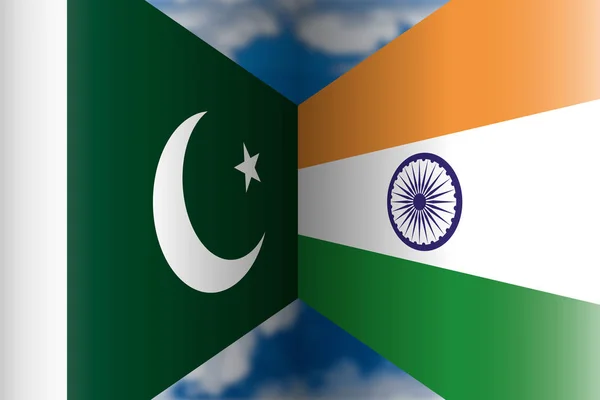
The recent eruption of violence between India and Pakistan has once again highlighted the fragile nature of peace in South Asia. Although the United States managed to broker a ceasefire, the post-conflict atmosphere remains tense, with both nations aggressively marketing their own version of events. Victory is loudly claimed on both sides, while the truth lies obscured in the fog of war and political spin.
In India, the media wasted no time celebrating what they labeled a successful operation. Headlines like “Pakistan Surrenders” dominated television screens soon after the ceasefire announcement. Defense Minister Rajnath Singh justified India’s military campaign as a response to last month’s attack on tourists in Kashmir, insisting that it sent a strong deterrent signal to terrorist groups and their sponsors.
Pakistan, however, painted an entirely different picture. Prime Minister Shehbaz Sharif declared the military’s response a defining moment in the country’s history. He praised Pakistani airstrikes for neutralizing Indian artillery quickly and decisively. Nationalistic fervor surged as crowds in Islamabad rallied in celebration, symbolically burning an effigy of Indian Prime Minister Modi in defiance.
The conflict saw dramatic claims from Pakistan that it had shot down five Indian fighter jets, including three highly advanced French-made Rafale aircraft. Such a blow would severely dent India’s air power and pride. While two Indian aircraft were confirmed to have crashed near the border, Indian officials have denied any such losses, despite foreign intelligence indicating otherwise.
To counter Pakistan’s claims, Indian authorities released satellite imagery purportedly showing heavy damage to Pakistani military installations, including radar stations and airstrips. These images were meant to prove that Indian airstrikes had achieved substantial tactical success. Pakistan, in turn, dismissed the visuals as exaggerated, accusing India of attempting to manipulate public opinion and international perception.
The ceasefire itself came as a surprise, announced by U.S. President Donald Trump through his Truth Social platform. Behind the scenes, U.S. Secretary of State Marco Rubio and Vice President JD Vance reportedly contacted leaders from both countries, urging restraint amid rising tensions. While Pakistan openly appreciated Washington’s role, India minimized U.S. involvement, claiming it had engaged directly with Pakistan.
This divergence in reactions highlights India’s long-standing policy of avoiding foreign mediation, especially on Kashmir, the central point of dispute. India insists that Kashmir is a purely internal matter, fiercely resisting any external involvement. Trump’s offer to mediate a long-term resolution for Kashmir was welcomed by Pakistan but fell on deaf ears in New Delhi, where sovereignty concerns remain paramount.
Though the ceasefire has temporarily paused open hostilities, the underlying tensions remain. Kashmir continues to serve as a flashpoint with the potential to reignite conflict at any moment. As both India and Pakistan trumpet hollow victories, the world watches uneasily, knowing that true peace remains elusive until the Kashmir issue is addressed directly and diplomatically.